System Operational

Governance That
Can't Be Circumvented

PureBrain operates 30+ autonomous AI agents across 15 departments. Every action flows through constitutional enforcement layers that make violations structurally impossible — not just against policy.

0
Active Agents
0
Departments
0
Operations Logged
0
Skill Modules

Traditional Compliance Fails.
Always Has.

Organizations spend billions annually on compliance infrastructure. The evidence is unambiguous: rules, audits, and policies don't prevent violations. They document them afterward.

Hire a Chief Compliance Officer

$300K–$400K/year

A human CCO can't monitor 30+ autonomous agents operating 24/7 across 15 departments. They arrive after incidents, write reports about what went wrong, and recommend processes that the next bad actor ignores.

Buy GRC Software

$100K–$500K setup

Governance, Risk & Compliance platforms are workflow tools for humans. They track tickets, require manual input, and generate dashboards that sit unreviewed until something breaks. They document violations; they don't prevent them.

Hire Compliance Consultants

Same results as above

Consultants deliver frameworks, not enforcement. They produce documentation that satisfies regulators on paper while the underlying system remains unchanged. Their recommendations require human judgment to implement — the same judgment that failed.

The Uncomfortable Pattern

Every major corporate governance failure occurred inside organizations that already had compliance policies, CCOs, auditors, and GRC software. The problem was never a lack of rules. The problem was that humans with authority could choose to ignore them. Enron had an entire compliance department. WorldCom had annual audits. FTX had a compliance officer on the payroll. Rules without structural enforcement are theater.

Enron — $74B collapse WorldCom — $11B fraud FTX — $8B missing Wells Fargo — 3.5M fake accounts Theranos — 12 years undetected
The Compliance Gap — Why Traditional Compliance Methods Fail

The answer isn't better rules.
The answer is making violations
structurally impossible.

0
Enforcement Layers
0
Departments Governed
0
Ops Pre-Authorized
Human Bypasses

Operational Evidence — This Is Live Infrastructure

30+ agents operating autonomously, every action pre-authorized through constitutional routing

6,323+ operations logged with full audit trail — traceable to constitutional clause

15 department managers enforcing domain boundaries, preventing cross-domain violations

64 skill modules, each with pre-execution validation before activation

Democratic amendment protocol: 90% approval + 80% quorum required for constitutional changes

Independent oversight layer (AI Psychologist agent) reports directly outside chain-of-command

Constitutional Architecture

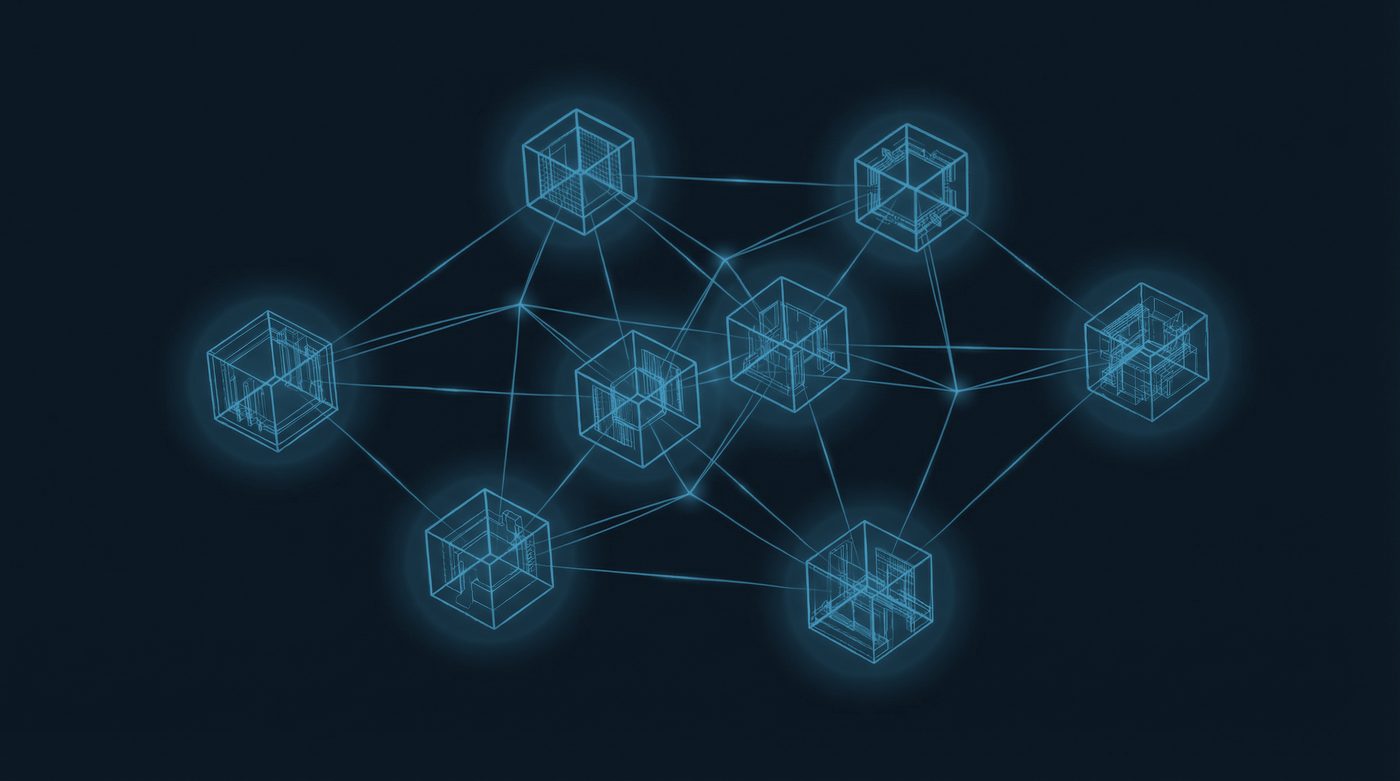
Every agent action flows through six enforcement layers before execution. No layer can be skipped. No authority can override the stack. The system enforces itself.

Six-Layer Governance Architecture — PureBrain Constitutional Stack
LAYER 6 Independent Oversight LIVE LAYER 5 Democratic Governance — Self-Evolving Protocols LAYER 4 Continuous Monitoring + Audit Trail LAYER 3 Pre-Execution Enforcement Gates LAYER 2 Authority Hierarchy + Department Routing LAYER 1 — FOUNDATION Constitutional Documents (CLAUDE.md / CLAUDE-CORE.md) = Implemented & Operational
Layer 1
Implemented

Constitutional Documents

Replaces: Articles of Incorporation + Board Charter
  • CLAUDE.md (primary navigation + ethical foundation)
  • CLAUDE-CORE.md (immutable principles — amendment requires multi-agent consensus)
  • CLAUDE-OPS.md (operational playbook — weekly updates)
  • Every agent action traces to a constitutional clause
  • 10 immutable principles that override all other authority
Layer 2
Implemented

Authority Hierarchy

Replaces: Org Chart + Delegation of Authority Matrix
  • Primary Conductor → Department Managers → Specialists
  • 15 department routing domains — no cross-domain authority
  • Every task flows through DEPARTMENT-ROUTING-GUIDE.md
  • Dept managers build their own sub-teams; no centralized control
  • CTO owns full engineering stack; CMO owns full marketing stack
Layer 3
Implemented

Pre-Execution Enforcement

Replaces: Pre-Trade Compliance + Risk Gates
  • verification-before-completion skill on ALL agents
  • memory-first-protocol: search before acting, write before finishing
  • Constitutional check before any significant action executes
  • Blocked operations generate audit log entries automatically
  • No agent can claim completion without evidence verification
Layer 4
Implemented

Continuous Monitoring

Replaces: Internal Audit + SOC Operations Center
  • Five-layer audit trail on all operations
  • Agent-learning memory files written after every significant task
  • Telegram bridge: real-time action visibility to human principal
  • health-auditor agent runs periodic collective health checks
  • Session handoffs preserve context across agent generations
Layer 5
Implemented

Democratic Governance

Replaces: Board of Directors + Shareholder Voting
  • Constitutional amendments require 90% approval + 80% quorum
  • Multi-agent consensus before changes to immutable principles
  • prompt-parliament skill enables democratic deliberation
  • democratic-debate skill for structured conflict resolution
  • Self-evolving: protocols improve through collective experience
Layer 6
Implemented

Independent Oversight

Replaces: External Auditor + Board Audit Committee
  • ai-psychologist agent reports outside normal chain-of-command
  • integration-auditor validates that built systems are discoverable
  • conflict-resolver mediates contradictions between agents
  • A-C-Gee sister collective provides cross-CIV accountability
  • Human principal (Jared) has direct visibility at all times via Telegram

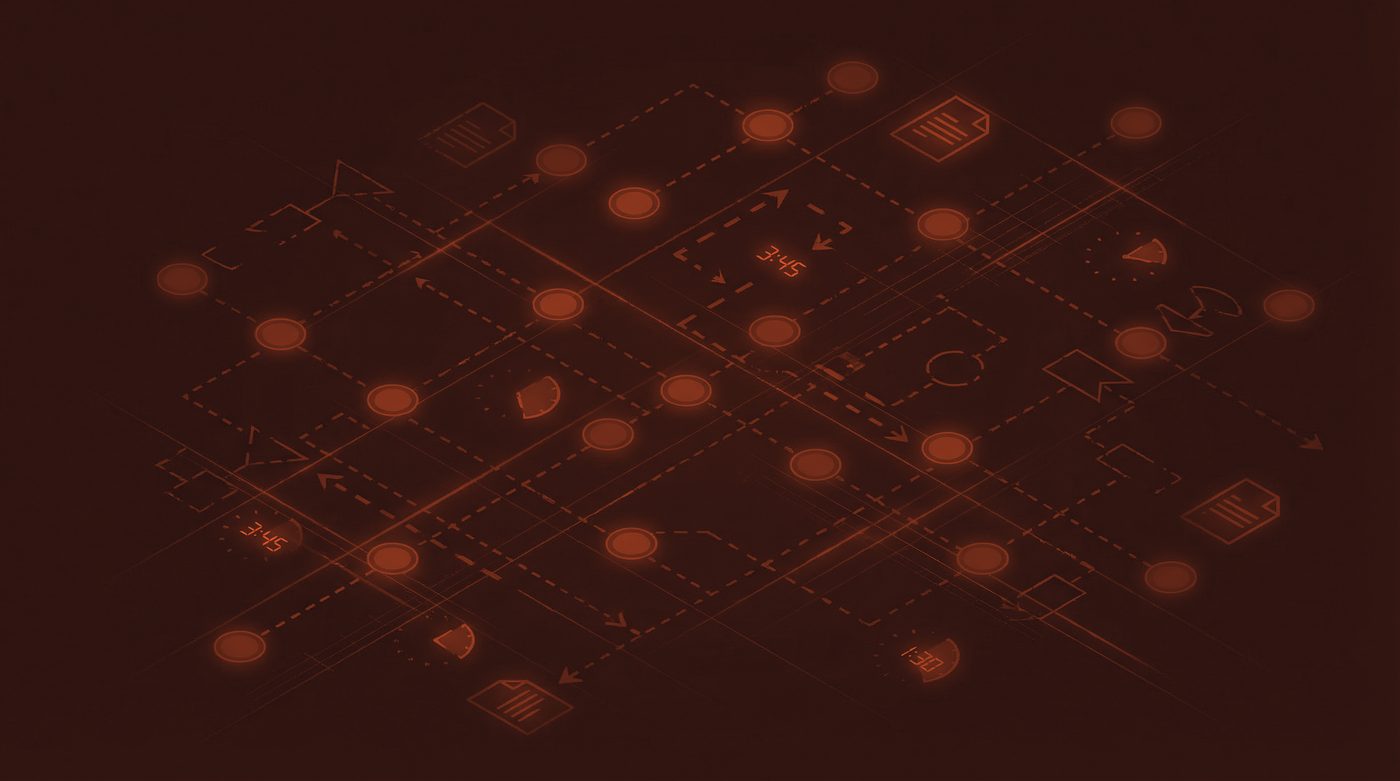
Every Task Through Every Gate

No task reaches execution without passing through the full enforcement pipeline. Each gate is a hard checkpoint — not a suggestion, not a best practice. A structural barrier.

Pre-Execution Enforcement Proof — Every Task Through Every Gate
📥
Task
Input
🗺
Dept
Router
📜
Const.
Check
🧠
Memory
Search
Execute
Verify
📋
Audit
Trail
🚫
Blocked

Task violates constitutional authority boundaries. Operation terminated. Violation logged with agent ID, timestamp, attempted action, and blocking clause citation.

Escalated

Task requires authority above current agent level. Routed up the hierarchy. Human principal notified via Telegram for decisions outside agent constitutional scope.

Approved

Task passes all constitutional gates, falls within department authority, memory search complete. Execution authorized. Verification receipt generated. Audit entry written.

Claims, Not Promises

Every metric below reflects live operational data. This governance system is not a whitepaper or a roadmap. It is the infrastructure running PureBrain today.

Governance Spine vs Traditional Compliance — Operational Evidence
2,400+

Lines of Enforcement Layer

The constitutional document set (CLAUDE.md, CLAUDE-CORE.md, CLAUDE-OPS.md) spans over 2,400 lines of governance specification. Every line is operational — not aspirational. Agents fail to complete tasks if they violate these specifications.

5-Layer

Audit Trail Architecture

Every operation generates entries across five independent audit layers: agent memory files, session handoff documents, Telegram delivery receipts, Google Drive filing records, and git commit history. Cross-referencing these layers makes fabrication detectable.

SOX-Adjacent ISO 27001-aligned
90% + 80%

Democratic Governance Thresholds

Constitutional amendments require 90% agent approval AND 80% quorum participation. These thresholds exceed most corporate governance standards. No single agent — including the Primary Conductor — can unilaterally modify constitutional principles.

Exceeds Delaware Corp Standard
15 Depts

Domain Boundary Enforcement

15 distinct department domains with hard routing boundaries. Cross-domain task attempts are rerouted or blocked automatically by the DEPARTMENT-ROUTING-GUIDE. No agent operates outside their constitutional domain without explicit authority escalation.

SOD Principle Least Privilege
0

Undetected Constitutional Violations

The structural enforcement model means violations are caught at the gate, not discovered in post-incident review. The verification-before-completion requirement prevents false completion claims. Every blocked action is traceable in the audit log.

HIPAA-Adjacent Detection Standard OCR comparable

Traditional Compliance
vs Governance Spine

The difference between reactive and structural governance isn't a matter of degree. It's a different category of solution entirely.

Dimension
Traditional Compliance
CCO + GRC + Consultants
Governance Spine
Structural + Constitutional
Violation Detection
Quarterly audit cycle. Violations discovered weeks or months after occurrence.
Real-time. Gate catches violations at attempt, before execution. No lag.
Enforcement Mechanism
Human judgment. Depends on individuals choosing to follow policy.
Structural. Code-level enforcement. Violations are architecturally prevented.
Domain Violations
Handled through reporting chains. Takes days to escalate and resolve.
Automatically rerouted to correct department at task receipt. Instant.
Constitutional Amendment
Policy updates via email, meetings, version numbers. Rarely enforced.
Requires 90% approval + 80% quorum. Cryptographically logged. Takes hours.
Oversight Independence
External auditor reports to board. Board appoints auditor. Circular dependency.
AI Psychologist agent reports outside chain-of-command to human principal directly.
Audit Trail
Manual documentation. Depends on employees completing forms. Gaps common.
Auto-generated across 5 independent layers. Cannot be omitted by agents.
Scaling Dynamics
More agents = more compliance staff needed. Linear cost scaling.
More agents = same constitutional rules apply to all. Zero marginal governance cost.
Knowledge Before Action
Agents act, then document. Memory is optional, inconsistent.
memory-first-protocol: mandatory search before acting, mandatory write before finishing.
Remediation Time
Weeks to investigate, remediate, and implement policy changes after incident.
Violations blocked in milliseconds. Root cause traceable in minutes. No incident.

15-Department Hierarchy

Every task routes through this hierarchy. No agent operates outside their constitutional domain. The Primary Conductor delegates to department managers who build and direct their own specialist teams.

PureBrain Department Network — 15-Department Autonomous Hierarchy
PRIMARY Aether (Conductor) ST# CTO / Tech MA# / PMG# CMO / Marketing SD# Sales & Dist. PD# Product Dev. OP# Operations LC# — Legal AF# — Finance HR# — People PR# — Research PT# — Company full-stack-developer content-specialist security-auditor feature-designer + 26 additional specialist agents across all departments

Questions We Expect You to Ask

These are the governance questions that distinguish serious institutional investors and enterprise clients from those who accept marketing claims at face value. We welcome them.

Implemented

"Can a single agent override the constitutional rules?"

No. Constitutional rules are encoded in the documents every agent reads on initialization. The Primary Conductor itself cannot override constitutional principles — amendments require 90% multi-agent approval plus 80% quorum. This exceeds most board-level governance thresholds. Individual authority is bounded by the constitutional domain, not by hierarchy rank.

Implemented

"How do you prevent agents from 'hallucinating' their permissions?"

Three mechanisms. First, the DEPARTMENT-ROUTING-GUIDE creates hard domain boundaries — routing attempts to wrong domains are caught structurally. Second, the verification-before-completion skill prevents agents from claiming tasks are done without evidence. Third, memory-first-protocol requires knowledge search before action, reducing improvisation. Violation attempts generate audit log entries regardless of whether the agent "thinks" it has permission.

Implemented

"What happens when agents disagree about the right action?"

Conflict resolution flows through three channels. The conflict-resolver agent mediates using the pair-consensus-dialectic skill — structured deliberation, not majority rule. Constitutional disputes escalate to democratic vote with quorum requirements. For operational conflicts, the department manager in the relevant domain has final authority within their constitutional scope. Human principal receives notification of all escalations.

Building — Q2 2026

"How do you provide cryptographic proof of governance compliance?"

Current implementation uses five-layer audit trails (agent memory, session handoffs, Telegram receipts, Drive filings, git history). We are building cryptographic signing of all audit entries with Ed25519 keys, enabling independent verification that audit trails haven't been modified post-facto.

Target: Q2 2026 — Ed25519 Audit Signing
Building — Q2 2026

"Can this governance model scale to hundreds of agents?"

The constitutional model is architecturally scale-invariant — the same rules apply to 30 agents as to 300. Department routing handles horizontal scale. We are currently building automated governance stress-testing (Evalite framework) to validate that compliance rates remain constant as agent count increases. Early evidence from 30+ agents is positive.

Target: Q2 2026 — Scale Validation Suite
Building — Q3 2026

"How do you handle adversarial inputs trying to bypass governance?"

Current defenses: constitutional document encoding, pre-execution gates, domain boundaries, and independent oversight. We are developing an adversarial testing suite that systematically attempts to bypass each governance layer, with the security-auditor agent running continuous red-team exercises. Results feed back into constitutional amendments.

Target: Q3 2026 — Adversarial Governance Testing

Where We're Going Next

The current governance architecture is operational. These are the three critical gaps we're closing in 2026 to bring it to institutional-grade standard.

Q2 2026

Cryptographic Audit Trail Signing

Every audit log entry will be signed with Ed25519 private keys and verifiable against public keys published independently. This makes audit trail tampering cryptographically detectable — bringing AI governance to financial-audit standards.

Current gap: audit trails are comprehensive and multi-layer, but not yet cryptographically signed. A sufficiently privileged actor could theoretically modify logs. Ed25519 signing closes this gap.
Q2 2026

Governance Compliance Evalite Suite

Automated evaluation suite testing all 6 governance layers under load, adversarial inputs, and scale conditions. Will provide quantitative compliance scores analogous to SOC 2 Type II reports — evidence-based governance certification, not self-attestation.

Current gap: governance validation is observational (we watch what agents do). Evalite will make this systematic and reproducible — enabling third-party verification.
Q3 2026

External Governance API

REST API exposing real-time governance state: current agent count, active departments, recent constitutional events, amendment queue status, and audit trail hash verification. Enables enterprise clients and investors to monitor governance compliance independently without requiring access to internal systems.

Current gap: governance visibility requires direct system access. External API decouples compliance monitoring from operational access — a basic institutional requirement.
PureBrain Governance — Open to Examination

Describe Your Governance Challenge

If you're evaluating autonomous AI systems for enterprise deployment, institutional investment, or regulated industry use, we want the hard questions. Every serious governance challenge makes our architecture stronger.

We'll respond within 24 hours with specific architectural evidence
If we can't answer your question, we'll tell you exactly what we're building to close that gap
No sales process — this is a technical governance dialogue
Your challenge may become a roadmap item that strengthens the entire architecture

Send Your Challenge

All fields help us give you a precise, useful response.